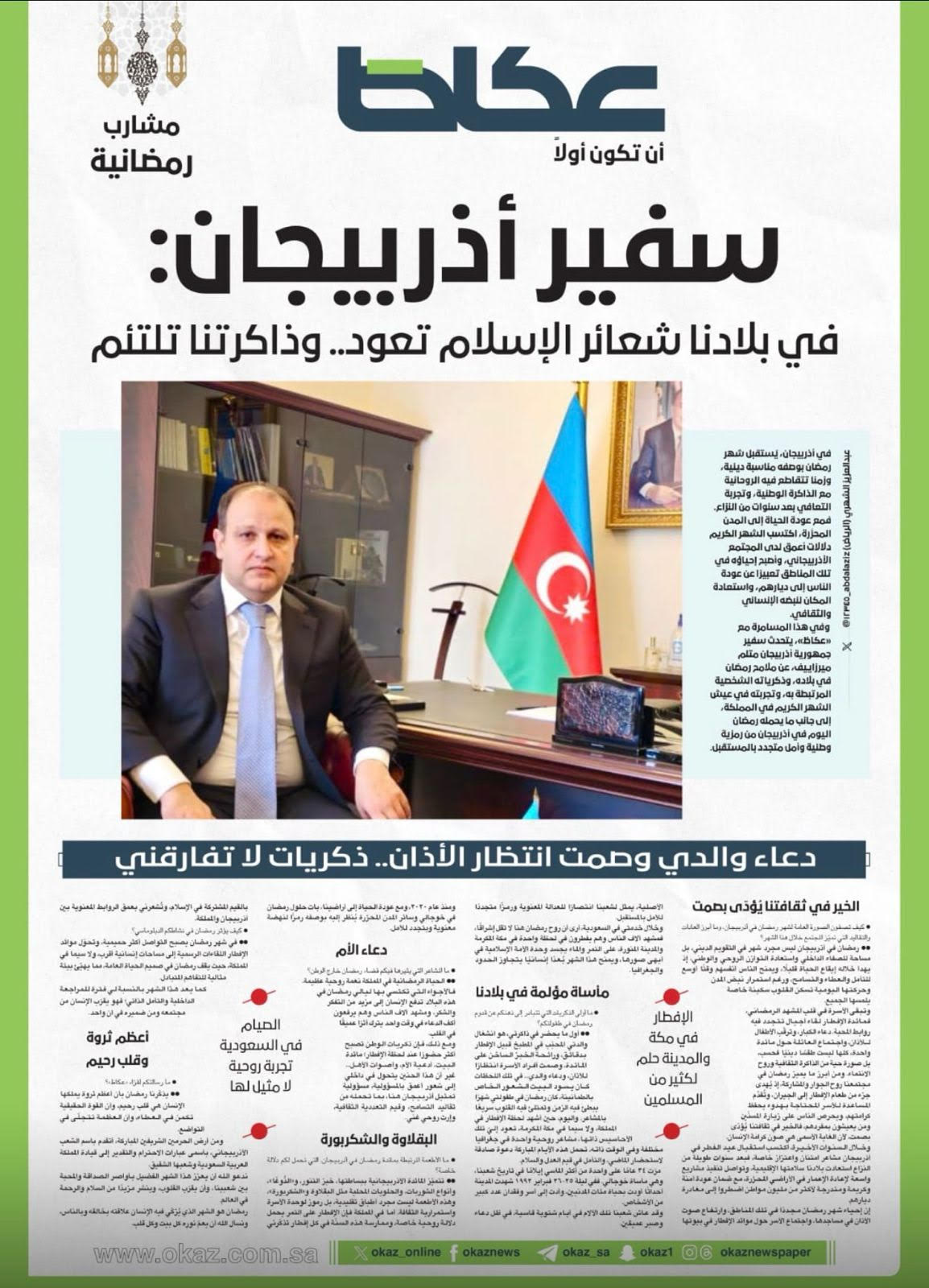
In an interview with Saudi Arabia’s “Okaz” newspaper, Ambassador Mutallim Mirzayev shared reflections on the spiritual, social, and national significance of Ramadan in Azerbaijan.
In an interview with Saudi Arabia’s “Okaz” newspaper, Ambassador Mutallim Mirzayev shared reflections on the spiritual, social, and national significance of Ramadan in Azerbaijan. Ramadan is not only a sacred month of worship, but also a unique period where spirituality intersects with national memory, solidarity, and post-conflict recovery. The renewed observance of Ramadan in the liberated territories symbolizes the return of displaced people, the revival of life, and renewed hope for the future. The interview highlights that Ramadan in Azerbaijan is a time when family values are strengthened, intergenerational bonds are reinforced, and a spirit of compassion and mutual care prevails. Iftar gatherings bring families together, while traditions of neighborly sharing, quiet charity, and care for the elderly remain central to Azerbaijani society. Recalling that the Khojaly tragedy coincided with Ramadan, the Ambassador noted that the Azerbaijani people endured those difficult days with patience and prayer. Today, the observance of Ramadan in Khojaly and other liberated areas represents moral healing, the restoration of justice, and a renewed sense of hope. The Ambassador also emphasized the unique spiritual atmosphere of Ramadan in Saudi Arabia, particularly in Makkah and Madinah, where thousands gather for iftar at the same time—reflecting the unity and solidarity of the Muslim world.